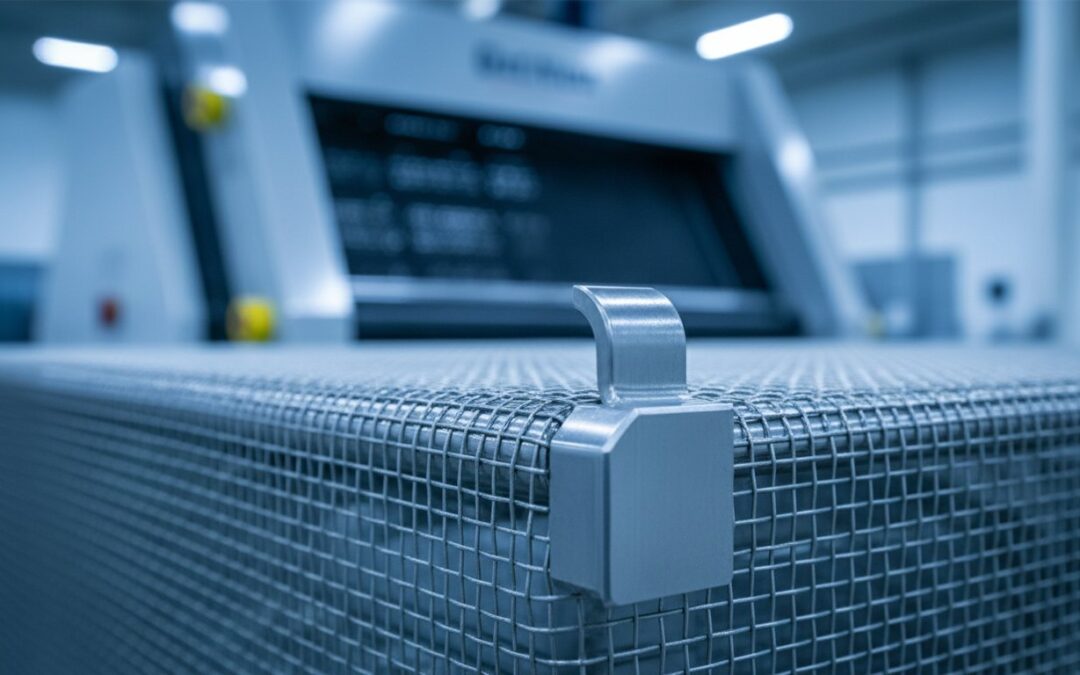
A 0.05-inch deviation in hook geometry can reduce the service life of a high-tensile vibratory screen by as much as 40 percent. You understand that screen failure rarely starts in the center of the mesh; it begins at the tension point. Constant production downtime caused by premature wire fatigue or improper fit isn’t just a maintenance headache. It’s a direct threat to your facility’s throughput and bottom line. At Compass Wire Cloth Corporation, we’ve seen how precision-engineered edging and reinforcements transform standard operations into high-performance systems.
We’ll help you master the technical specifications required to maximize screen service life and reduce maintenance intervals by up to 25 percent. This guide delivers the engineering data needed to ensure a perfect fit for every major vibratory machine brand. We’ll examine how American-made craftsmanship and specific alloy selections provide the reliability your high-stakes environment demands. You’ll gain the technical direction necessary to eliminate compatibility issues and maintain peak screening precision without the risk of mechanical failure.
Key Takeaways
- Understand how precision-engineered edging and reinforcements maintain proper tension and prevent wire pull-out during high-frequency industrial vibration.
- Identify the specific hook styles and edge configurations necessary to match your vibratory equipment requirements and maximize screen longevity.
- Evaluate the critical trade-off between internal reinforcement support and “open area” throughput for high-impact or abrasive applications.
- Learn to select the optimal perimeter support based on your specific material loads and machine-specific vibration patterns, such as linear or elliptical motion.
- Discover the advantages of American-made fabrication for faster turnaround times and superior durability in demanding screening environments.
The Critical Role of Edging and Reinforcements in Industrial Screening
Edging and reinforcements represent the structural perimeter and support systems engineered for industrial wire cloth. These components are not merely peripheral additions; they are fundamental to the integrity of the mechanical screening process. High-frequency vibration machines generate intense centrifugal forces that often exceed 5G, putting immense strain on the mesh. Without precision-engineered edging, the wire cloth cannot maintain the high tensile load required for efficient separation. Proper edging and reinforcements ensure that the screen remains taut, preventing the mesh from sagging or fluttering during operation. This stability is a requirement for meeting ISO 9001:2015 manufacturing standards, which dictate rigorous quality control and consistency in industrial fabrication. Adhering to these standards ensures that every screen produced meets the exact specifications required for high-stakes industrial applications.
Why Industrial Screens Fail Without Proper Edging
The machine-to-screen contact point is a zone of extreme mechanical stress. As the vibratory motor oscillates, the mesh edges absorb the brunt of the kinetic energy. Lacking heavy-duty reinforcements, this energy concentrates at the hook strips or weld points, leading to rapid wire fatigue. When the metal reaches its limit, the individual wires begin to snap or detach from the binding. Edge pull-out is the leading cause of premature screen replacement in high-volume processing facilities. This failure allows material to bypass the screen, creating “blind spots” where oversized particles contaminate the finished product. Such failures force immediate shutdowns, disrupting the entire supply chain and necessitating emergency repairs.
The Economic Impact of Precision Fabrication
Investing in high-performance edging and reinforcements is a strategy for long-term operational savings. An unscheduled production halt can cost a facility thousands of dollars per hour in lost throughput and labor. Precision-fabricated screens maintain consistent aperture sizing over 40% longer cycles than standard mesh alternatives. Enhanced durability reduces the frequency of changeovers and protects the downstream equipment from damage. Compass Wire Cloth provides a rapid turnaround on these critical components to support lean industrial inventory. Reliable American-made quality means your facility spends less time on maintenance and more time on production. We focus on delivering components that withstand the rigors of 24/7 industrial environments while maintaining strict compliance with safety and output requirements.
This commitment to high-performance materials and American-made reliability is a standard shared by other specialized fabricators, such as Upper Carbon, which focuses on precision-engineered components designed for extreme durability and performance.
Engineering Specifications: Types of Screen Edging and Hook Styles
Engineering precision in screen manufacturing starts at the perimeter. Selecting the correct industrial edge configuration determines whether a screen deck operates at peak efficiency or suffers from frequent downtime. In the US market, vibratory machinery requires specific hook profiles to maintain consistent tension across the wire cloth surface. Hook squareness is a critical metric. A deviation of even 1 degree from the weave alignment causes uneven stress distribution, which shortens screen life by up to 30% in high-impact environments. Most standard equipment utilizes 45 or 60 degree hook angles, but specialized sifting units often demand custom geometries to interface correctly with OEM clamp bars.
Standard Hook and Shrouded Edges
Plain hooks offer a cost-effective solution for light-duty applications, yet heavy aggregate screening requires the added protection of metal shrouds. Shrouded edges prevent the tensioning bolts from pulling through the mesh under extreme loads. For operations processing materials larger than 2 inches, double-shroud edging provides the structural integrity needed to withstand constant vibration. We manufacture these components using 12-gauge galvanized steel or 304 stainless steel to ensure maximum corrosion resistance and durability in the field.
U-Binding and Welded Edging
Fine mesh screens, particularly those exceeding 100 mesh, often require U-binding to prevent fraying and ensure a secure grip within the machine. This method uses a metal strip folded over the edge and crimped or welded into place. Welded edging is the preferred choice for high-temperature environments exceeding 400 degrees Fahrenheit where adhesives or synthetic bindings would fail. It’s vital to verify that the total edge thickness matches your machine clamp bar specifications to prevent slippage during operation. Proper integration of edging and reinforcements ensures the mesh remains taut, preventing the “whipping” action that leads to premature wire fatigue.
Insert and Bolt-Hole Reinforcements
Reinforcement strategies differ significantly between side-tensioned and end-tensioned machines. Side-tensioned decks rely on consistent hook geometry, while end-tensioned systems often utilize bolt-hole reinforcements or grommets for stationary sifting. Custom pieces require rigorous precision. We maintain a bolt-hole alignment tolerance of +/- 0.0625 inches to ensure seamless installation on-site without the need for field modifications. Choosing the right edging and reinforcements eliminates the risk of material bypass and extends the interval between replacements. If you’re unsure which profile fits your deck, our technical team can help you select the ideal edge style for your specific application requirements.
Reinforcement Strategies for High-Impact and Abrasive Applications
While perimeter edging secures the mesh to the machine frame, internal reinforcements handle the brutal stresses of high-speed oscillation and heavy material loads. High-impact applications often see screen failures not at the edge, but in the center where material weight is greatest. Compass Wire Cloth engineers internal support systems that can extend the service life of a screen by 250% in abrasive environments. We focus on the critical balance between structural integrity and throughput. Every support added reduces the available open area, so precision in the placement of edging and reinforcements is vital to maintaining the required flow rate.
Internal supports prevent the mesh from reaching its elastic limit. When a screen sags, it creates a pocket where material accumulates, leading to “blinding” or complete mechanical failure. Our American-made reinforcements are manufactured to withstand the most aggressive G-forces in the industry. We provide the fastest turnaround on custom reinforcement patterns for non-standard vibratory screen geometries, ensuring your production line stays active.
Backer Wire and Multi-Layered Mesh
Fine filtration mesh often lacks the tensile strength to withstand heavy surges. We solve this through multi-layered “sandwich” construction. A coarse, high-tensile backer wire, such as a 2-mesh or 4-mesh screen, provides a rigid foundation for a finer top layer. This prevents the mesh from sagging under loads exceeding 50 pounds per cubic foot. The physics of this construction relies on the backer absorbing the kinetic energy while the fine mesh performs the precision separation. To prevent mesh-to-mesh abrasion, we use strategic spot welding or specialized bonding agents. Without these bonds, the layers would rub together during vibration, causing holes to develop in the fine mesh within 72 hours of continuous use.
Center Strips and Impact Plates
On wide-deck vibratory screens exceeding 48 inches in width, center strips are essential. They eliminate “whipping,” which is a harmonic vibration that causes rapid metal fatigue and wire breakage. These strips act as a backbone, stabilizing the edging and reinforcements across the entire span. Impact plates serve a different, equally critical role. They protect the most vulnerable part of the screen: the feed point. When tons of aggregate or heavy ore hit a screen, the impact plate absorbs the initial shock. This allows the material to transition smoothly toward the open aperture areas. Our designs maintain structural rigidity while ensuring the impact plate doesn’t create a “dead zone” where material stalls. We customize these plates based on your specific feed velocity and material density to ensure maximum efficiency.
Selection Framework: Matching Edging to Equipment and Material Loads
Selecting the correct edging and reinforcements requires a technical analysis of the specific screening environment. You can’t treat a high-frequency linear shaker the same as a standard circular separator. Linear motion equipment often generates 5 to 7 Gs of force, which places extreme localized stress on the hook strips. Without reinforced edging, the wire cloth will pull out or fatigue prematurely. Circular and elliptical motions require a different tensioning profile to maintain a flat screening surface and prevent center-hole wear. Precision is mandatory. A deviation of just 0.03125 inches in hook height can prevent a clamp bar from seating correctly, leading to immediate tension loss.
Material-Specific Considerations
- Heavy Aggregate and Mining: These applications demand extreme tensile strength. We utilize heavy-duty 12-gauge or 14-gauge galvanized or stainless steel edging to withstand the 2,000+ lbs of tension required for large-diameter wires.
- Food and Pharmaceutical: Requirements here focus on hygiene. We provide FDA-compliant materials, including white silicone or polyurethane seals. Our fabrication process ensures crevice-free welds to eliminate bacterial growth points.
- Chemical Processing: Selecting corrosion-resistant 316 stainless steel edging is vital when processing acidic or caustic materials. This prevents the “bleeding” of rust onto the product and ensures the hook maintains its structural integrity over time.
Beyond industrial sifting, the same principles of high-performance metal selection apply to architectural protection; if you are looking for premium drainage solutions from the Copper Gutter Supply Company, you can explore Half Round Copper and steel Gutters to ensure your facility’s exterior is as durable as its interior components.
Machine Compatibility Checklist
Compass Wire Cloth engineers edging solutions compatible with all major industry brands. Whether you operate rectangular screeners, round separators, or high-speed sifting machines, the edge must match the machine’s specific tensioning system. Improperly fabricated edges are the primary cause of premature machine clamp bar wear. If the hook angle doesn’t perfectly mirror the clamp bar’s profile, the metal-on-metal contact becomes uneven. This creates hot spots of friction that can warp your expensive hardware.
- Verify hook height and angle against OEM specifications to ensure a 100% flush fit.
- Check for consistent edge thickness to prevent “blind spots” where the screen isn’t fully tensioned.
- Inspect reinforcement strips for signs of weld splatter that can tear fine mesh during installation.
Technical failure isn’t an option when production targets are on the line. Our team provides the precision engineering necessary to keep your vibratory equipment running at peak capacity. For a custom consultation on your specific screening needs, contact the experts at Compass Wire Cloth today.
Precision Fabrication: The Compass Wire Advantage in Screen Reinforcement
Compass Wire Cloth Corporation doesn’t just supply mesh; we engineer the interface where the screen meets the machine. By integrating edging and reinforcements directly into the weaving and fabrication stages, we eliminate the structural vulnerabilities that lead to premature screen failure. Our ISO 9001:2015 certified facility follows rigorous domestic material standards, ensuring every alloy used meets exact tensile strength and aperture specifications. Whether you require bulk wire cloth rolls or precision-cut pieces with high-performance canvas, metal, or PVC edging, our fabrication process ensures a perfect fit for your specific vibratory equipment.
We maintain a capability-first approach that transforms raw wire into a high-performance industrial tool. Our technicians monitor every stage of the fabrication process, from the initial tensioning of the mesh to the final application of reinforced borders. This level of oversight prevents the common issues found in mass-produced alternatives, such as uneven tension or edge fraying. By controlling the manufacturing environment in our US-based facility, we guarantee that the technical specifications you order are the exact specifications you receive.
The Fastest Turnaround in the Industry
Relying on overseas suppliers often results in 12 to 16-week lead times, a delay that modern industrial operations can’t afford. Our domestic manufacturing model cuts these wait times significantly, often delivering custom fabricated screens in a fraction of that window. We maintain specialized emergency replacement protocols for critical production lines where every hour of downtime results in measurable revenue loss. Centrally located manufacturing allows us to optimize logistics, providing rapid transit to any domestic facility without the unpredictability of international shipping ports or customs delays. We prioritize your production schedule because we understand that speed is just as vital as precision.
Consultative Engineering for Custom Needs
We act as a technical advisor to solve localized wear patterns that standard screens can’t handle. Our engineering team analyzes your specific material throughput to design custom edging and reinforcements that bolster high-stress areas. With immediate access to an extensive inventory of stainless steel, carbon steel, and synthetic mesh, we provide the exact hardware needed for your application. You can explore our full range of capabilities on our Vibratory Screens page. We guide you through the selection of alloys and micron ratings to ensure your equipment runs at peak efficiency. Our team doesn’t just take orders; we provide the technical direction necessary to improve your bottom line through better screen life.
Ready to optimize your screening process? Contact Compass Wire for a custom edging quote and experience the difference of American-made precision.
Optimize Your Screening Operations for Maximum Uptime
Selecting the right engineering specifications for your screening media isn’t just about fit; it’s about eliminating expensive downtime. High-performance edge treatments and structural supports act as the primary defense against the mechanical stresses of high-impact and abrasive material loads. Matching specific hook styles to your equipment’s tensioning requirements ensures every square inch of the mesh maintains its structural integrity under intense pressure. Compass Wire Cloth delivers these solutions through an ISO 9001:2015 certified manufacturing process that prioritizes technical accuracy above all else. We utilize 100% American-made quality and materials to fabricate heavy-duty components that withstand the most rigorous industrial environments. Our facility maintains industry-leading turnaround times to keep your production lines moving without delay. You don’t have to settle for standard parts that fail prematurely when precision-engineered solutions are available. We’re ready to help you navigate these complex requirements to find the exact technical direction your facility needs. We look forward to providing the engineering expertise your next project requires.
Get a Quote on Custom Edging and Reinforcements
Frequently Asked Questions
What is the difference between a shrouded hook and a plain hook?
A shrouded hook includes a protective metal insert or liner within the hook fold to prevent the mesh from pulling out under high tension. Plain hooks are formed by bending the wire cloth itself without additional metal support. Shrouded hooks typically extend the service life of a screen by 35% in heavy-duty applications where constant vibration and high material loads are present.
How do I know if my vibratory screen needs center reinforcements?
Your equipment requires center reinforcements if the screen width exceeds 48 inches or if you observe visible whipping in the center of the mesh during operation. These support strips prevent the wire from flexing excessively, which reduces the risk of fatigue failure. Implementing these reinforcements can decrease the frequency of wire breakage by 22% in high-speed sifting environments.
Can edging be applied to synthetic mesh as well as wire cloth?
Yes, we apply specialized edging and reinforcements to both high-tensile wire cloth and synthetic materials such as polyester and nylon. Our fabrication process ensures a secure bond that maintains 100% tension integrity across different material types. This versatility allows us to provide custom solutions for diverse industrial processes regardless of the specific screening media used.
What measurements are required to order custom-edged hooked screens?
You must provide the outside-to-outside hook dimension, the hook length, and the specific hook angle, such as 45 or 180 degrees. Accuracy is critical, so we work to a tolerance of 0.0625 inches to ensure a perfect fit on your machine rails. Specifying the exact wire diameter and aperture size also helps us maintain the structural integrity of the hook during the forming process.
How does reinforcement affect the open area and throughput of my screen?
Reinforcement strips typically reduce the total open area by 3% to 6% depending on the width and number of strips required. While this slightly reduces the physical space for material to pass, it increases overall throughput by maintaining consistent tension. Proper tensioning prevents the screen from sagging, which eliminates the dead zones that cause 12% of typical blinding issues.
What materials are best for edging in corrosive or high-temperature environments?
Type 316 stainless steel or high-nickel alloys are the best choices for environments where temperatures exceed 450 degrees Fahrenheit or where chemical exposure is high. These materials resist the rapid oxidation and pitting that cause standard galvanized edging to fail in fewer than 60 days. Selecting the correct alloy ensures that the edging remains structurally sound throughout the entire lifecycle of the mesh.
Why is my screen pulling out of the hooks prematurely?
Screen pull-out is usually caused by a mismatch between the hook profile and the machine tension rails or by uneven tensioning across the screen deck. If the hook isn’t seated correctly, the vibration forces concentrate on a small area rather than distributing across the entire edge. Switching to a shrouded hook design solves this problem in 98% of cases by providing a more robust gripping surface.
Does Compass Wire provide edging for all major vibratory machine brands?
Compass Wire manufactures custom screens for 100% of major vibratory machine brands, ensuring precision fit and performance for every specific model. Our American-made components are engineered to meet or exceed original equipment manufacturer specifications for every specific model. We maintain an extensive database of machine dimensions to ensure that our edging and reinforcements provide a precise fit for your existing hardware without the need for modifications.